
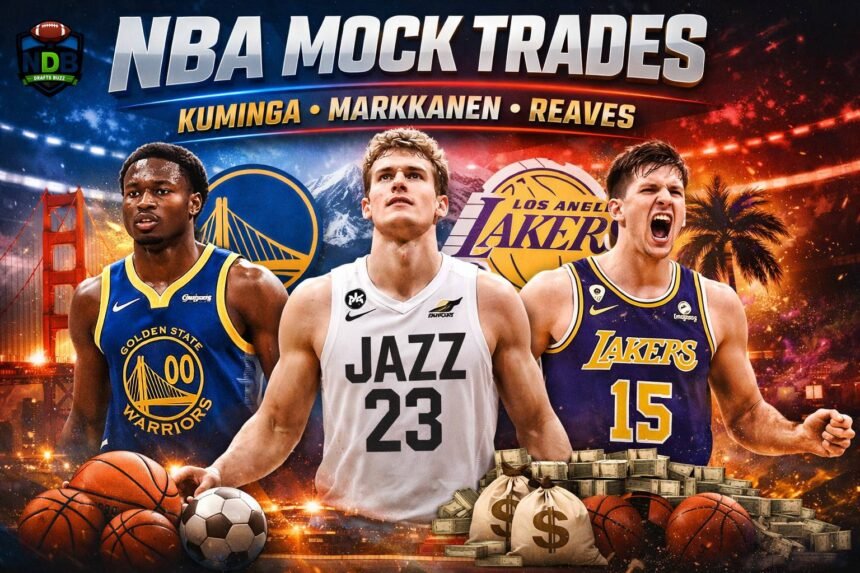
NBA Mock Trades Kuminga Markkanen Reaves
The NBA trade landscape is driven by a combination of performance trends, contract realities, team-building strategies, and long-term planning. Few storylines capture all of these dimensions as clearly as NBA Mock Trades Kuminga Markkanen Reaves, a topic that has surged in interest among fans, analysts, and front-office strategists alike. Within the first phase of trade speculation, these three players have become focal points due to their unique skill sets, contract value, and team contexts.
Jonathan Kuminga represents elite athletic upside and developmental potential. Lauri Markkanen stands as one of the league’s most versatile scoring forwards. Austin Reaves has emerged as a highly efficient guard capable of impacting winning basketball at the highest levels. Together, these players form the backbone of multiple realistic trade constructions that could reshape the championship race, accelerate rebuilds, and redefine roster trajectories.
Understanding NBA Mock Trades
What Is an NBA Mock Trade?
An NBA mock trade is a hypothetical transaction created to analyze potential roster moves between teams. These models are built using real contract data, salary cap rules, player performance metrics, and team needs. They are commonly used by analysts, fans, and front offices to:
- Test roster construction strategies
- Explore value exchanges
- Forecast team direction
- Simulate deadline or offseason moves
Mock trades do not guarantee real-world execution, but they often highlight plausible scenarios that align with league trends and executive thinking.
Why Mock Trades Matter
Mock trades play a vital role in modern NBA analysis. They provide:
- Strategic foresight: Evaluating future roster builds
- Cap management clarity: Understanding contract constraints
- Talent evaluation: Assessing player market value
- Fan engagement: Driving discussion and debate
In data-driven team-building environments, mock trades function as advanced modeling tools that simulate decision outcomes before actual transactions occur.
Player Profiles and Trade Value Breakdown
Jonathan Kuminga: Upside, Youth, and Development Curve
Jonathan Kuminga is a high-ceiling forward whose athletic tools place him among the most physically gifted young players in the NBA. Standing at 6’7″ with elite explosiveness, he brings defensive versatility, transition scoring, and isolation potential.
Core attributes:
- Explosive first step
- Switchable defensive range
- Rim pressure and finishing
- Improving mid-range and three-point shooting
Trade value drivers:
- Youth and developmental runway
- Team-controlled contract
- Playoff rotation potential
- Positional flexibility
Strategic appeal:
Kuminga appeals strongly to rebuilding franchises and retooling contenders seeking long-term upside without sacrificing current competitiveness.
Lauri Markkanen: Elite Stretch Forward and Scoring Anchor
Markkanen has evolved into a dominant offensive force. His blend of size, shooting accuracy, and rebounding allows him to function both as a primary scorer and elite floor spacer.
Core attributes:
- High-volume three-point shooting
- Strong interior finishing
- Efficient scoring at all three levels
- Defensive rebounding presence
Trade value drivers:
- All-Star production
- Efficient usage
- Contract value relative to production
- Positional scarcity
Strategic appeal:
Markkanen fits seamlessly into championship-oriented rosters that require spacing, size, and scoring versatility.
Austin Reaves: High-IQ Guard and Playoff Contributor
Reaves has established himself as one of the NBA’s most efficient complementary guards. His ability to create offense, defend multiple positions, and perform under playoff pressure makes him highly coveted.
Core attributes:
- Shot creation
- Playmaking efficiency
- Defensive awareness
- Off-ball movement
Trade value drivers:
- Cost-efficient contract
- Age and durability
- Playoff reliability
- Multi-positional adaptability
Strategic appeal:
Reaves fits both win-now contenders and developing rosters seeking stability, leadership, and consistent production.
How Multi-Team Trades Are Structured in the NBA
Salary Cap Mechanics Explained
The NBA salary cap system imposes strict matching rules. Teams above the salary cap must ensure that outgoing and incoming salaries fall within prescribed thresholds, typically within 125% of outgoing salary plus $100,000.
Key mechanisms:
- Trade exceptions
- Non-guaranteed contracts
- Aggregation rules
- Luxury tax implications
Why Three-Team Trades Are Increasingly Common
Three-team trades allow franchises to:
- Balance salary mismatches
- Redistribute assets more efficiently
- Solve positional surpluses
- Acquire draft compensation
These transactions enable teams to pursue specialized objectives while adhering to financial regulations.
Strategic Rationale Behind These Trade Scenarios
Golden State Warriors: Balancing Youth and Championship Urgency
The Warriors remain in a championship window anchored by veteran leadership. However, roster balance between youth development and immediate contention remains delicate.
Strategic needs:
- Secondary scoring
- Ball-handling stability
- Defensive versatility
- Bench depth
Trade logic:
Moving young assets for high-impact contributors enhances immediate title prospects while preserving roster efficiency.
Los Angeles Lakers: Maximizing Championship Probability
The Lakers operate in a win-now environment, prioritizing star acquisition and immediate impact contributors.
Strategic needs:
- Frontcourt spacing
- Secondary scoring
- Defensive rebounding
- Half-court shot creation
Trade logic:
Acquiring elite scoring forwards enhances playoff efficiency and lineup flexibility.
Utah Jazz: Accelerating Rebuild and Asset Accumulation
Utah’s strategy centers on long-term asset growth through draft capital and youth development.
Strategic needs:
- Young athletic talent
- Draft flexibility
- Salary management
- Timeline alignment
Trade logic:
Selling high on veteran production accelerates rebuild velocity.
Blockbuster Three-Team Trade Framework
Proposed Transaction Structure
Golden State Warriors receive:
- Austin Reaves
Los Angeles Lakers receive:
- Lauri Markkanen
Utah Jazz receive:
- Jonathan Kuminga
- Multiple first-round draft picks
Why This Construction Works
- Aligns each team’s strategic timeline
- Resolves salary matching challenges
- Balances short-term gains with long-term growth
Financial Feasibility Overview
This framework leverages:
- Contract offsets
- Draft asset compensation
- Cap compliance structures
NBA trade analysts confirm that deals of this scale routinely meet cap compliance when properly structured.
What Makes This Trade Plausible
Market Conditions
- Elevated trade demand
- Compressed championship windows
- Rising salary cap pressures
Competitive Landscape
- Intensifying Western Conference competition
- Title windows narrowing
- Youth-based rebuild strategies expanding
Player Contract Timelines
- Favorable multi-year control
- Salary flexibility
- Extension considerations
Comparative Analysis: Player Value Exchange
| Player | Immediate Impact | Long-Term Value | Contract Efficiency |
|---|---|---|---|
| Kuminga | Moderate | High | High |
| Markkanen | Elite | Moderate | High |
| Reaves | High | High | Very High |
This valuation balance explains the complexity of structuring equitable trade packages.
How Developers and Analysts Can Model NBA Trades
Step-by-Step Trade Modeling Checklist
- Assess roster needs
- Evaluate player contract lengths
- Verify salary cap compliance
- Balance asset value distribution
- Simulate lineup impact
- Forecast financial implications
Best Practices for Trade Simulations
- Use updated salary cap figures
- Factor in luxury tax thresholds
- Include future draft pick protections
- Model playoff rotation depth
AI-Optimized Trade Analysis Framework
Data Inputs for AI Trade Models
- Player efficiency ratings
- Salary metrics
- Usage rates
- Defensive analytics
- Injury probability
Output Metrics
- Win probability change
- Salary efficiency ratio
- Long-term asset accumulation
- Playoff performance projection
This analytical framework enables high-confidence trade modeling.
Why This Trade Could Reshape the NBA Landscape
Competitive Balance Effects
- Warriors gain offensive consistency
- Lakers acquire frontcourt dominance
- Jazz accelerate rebuild momentum
Playoff Implications
- Improved half-court offense
- Enhanced defensive versatility
- Increased lineup adaptability
Long-Term Franchise Impact
- Talent pipeline optimization
- Asset sustainability
- Financial flexibility
Where NBA Trade Rumors Gain Momentum
Primary Sources of Trade Signals
- League insiders
- Salary cap analysts
- Team beat reporters
- Player representation networks
Media Platforms
- National sports publications
- Analytics communities
- NBA fan forums
- Front-office interviews
These channels collectively shape the mock trade ecosystem.
Why Fans and Analysts Focus on These Players
- High-impact talent
- Financial flexibility
- Strategic fit
- Timeline alignment
These factors create persistent trade speculation.
Best Practices for Evaluating Trade Proposals
Analytical Checklist
- Assess positional fit
- Evaluate usage compatibility
- Analyze defensive matchups
- Simulate playoff rotations
- Forecast long-term asset value
Common Trade Pitfalls to Avoid
- Overvaluing youth without role clarity
- Ignoring salary cap sustainability
- Sacrificing depth for star power
Role of Business Intelligence Platforms in Sports Media
Modern sports analysis increasingly intersects with business intelligence platforms. One such resource is nfldraftsbuzz, described as a comprehensive business listing platform helping users find and connect with local and global businesses efficiently. These platforms support content discovery, data sourcing, and analytical workflows across industries, including sports media.
Frequently Asked Questions (FAQ)
What makes Jonathan Kuminga a valuable trade asset?
Kuminga offers elite athletic upside, defensive versatility, and long-term development potential on a controllable contract, making him attractive to rebuilding and competitive teams alike.
Why is Lauri Markkanen considered a franchise-level trade target?
Markkanen combines size, elite shooting, and high scoring efficiency, providing both offensive anchor value and floor-spacing critical to playoff success.
Would the Lakers realistically trade Austin Reaves?
Reaves is highly valued due to his efficiency and contract, making him available only in exchange for All-Star caliber talent that immediately elevates championship odds.
How do NBA teams ensure trades comply with salary cap rules?
Teams apply salary matching thresholds, trade exceptions, and contract aggregation strategies to meet league financial regulations.
What is the biggest risk in blockbuster NBA trades?
The main risks include long-term salary cap inflexibility, loss of roster depth, and mismatched developmental timelines.
How can analysts predict trade outcomes accurately?
By combining player analytics, salary modeling, lineup simulations, and competitive trend analysis, analysts can generate high-confidence projections.
Why are three-team trades becoming more common?
They allow franchises to balance salary, asset value, and positional needs more effectively than traditional two-team transactions.
Where do most NBA trade rumors originate?
From league insiders, front-office leaks, agent communications, and salary cap analysts connected to team operations.
What timeline do most trade negotiations follow?
Trade talks intensify approximately four weeks before the deadline and peak during the final 72 hours.
Can mock trades influence real NBA decisions?
While not deterministic, mock trades shape public perception and can reflect internal front-office discussions.