

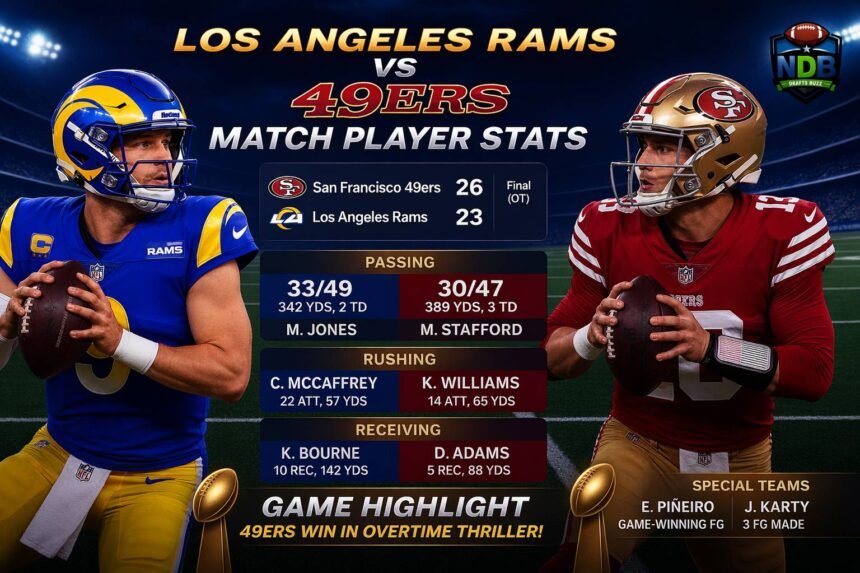
The October 2, 2025 matchup between the Los Angeles Rams and the San Francisco 49ers delivered one of the most competitive games of the NFL season. Both teams entered the contest with strong divisional ambitions, making this encounter more than just a regular-season fixture. The rivalry atmosphere and playoff-like intensity were evident from the opening kickoff.
This game drew attention for its balanced display of offense and defense, where each side executed structured game plans rather than relying solely on explosive plays. The Rams leaned on their passing efficiency, while the 49ers focused on sustained drives and clock control. These contrasting strategies created a tactical battle that kept the scoreline close throughout regulation.
For fans and analysts searching for los angeles rams vs 49ers match player stats, this contest offers valuable insight into how individual performances aligned with team objectives. Quarterback accuracy, receiver consistency, and defensive discipline shaped the final outcome. As a result, the match stands as a strong example of how preparation and execution influence results in high-pressure divisional games.
Match Overview and Final Score
The October 2, 2025 clash between the Rams and 49ers delivered a tightly contested NFC West battle. Played under prime-time pressure, both teams showcased balanced offensive schemes and disciplined defensive execution. From the opening drive, the tempo suggested a game that would remain close until the final whistle.
San Francisco built an early rhythm through short passing and time-of-possession control. Los Angeles countered with explosive plays, particularly through its aerial attack, keeping the scoreboard level through multiple lead changes. Neither side allowed the contest to slip away, reflecting the rivalry’s intensity.
By regulation’s end, the score remained tied, forcing overtime. The 49ers capitalized on field position and situational awareness to secure a narrow victory. The final result reflected a contest where execution in critical moments proved more valuable than raw yardage totals.
Final Score Table
| Team | Q1 | Q2 | Q3 | Q4 | OT | Total |
|---|---|---|---|---|---|---|
| San Francisco 49ers | 7 | 10 | 3 | 3 | 3 | 26 |
| Los Angeles Rams | 0 | 7 | 7 | 9 | 0 | 23 |
Team Performance Breakdown
The 49ers emphasized ball control and efficiency, sustaining long drives and limiting turnovers. Their offense mixed short passes with steady rushing attempts, allowing them to manage the clock and reduce pressure on their defense. This strategic approach kept the Rams’ explosive playmakers off the field for extended periods.
Los Angeles relied more heavily on vertical passing and quick-strike scoring drives. Their offense accumulated higher total yardage, particularly through the air, but struggled to convert a few critical third- and fourth-down opportunities late in the game. These missed chances shifted momentum.
Defensively, both units produced timely stops and pressured opposing quarterbacks consistently. San Francisco’s red-zone discipline proved decisive, while Los Angeles generated more sacks but fewer turnovers. Overall, the performance gap was minimal, reinforcing how closely matched these teams were.
Team Comparison Table
| Category | 49ers | Rams |
|---|---|---|
| Total Yards | 365 | 412 |
| Passing Yards | 342 | 389 |
| Rushing Yards | 57 | 65 |
| Turnovers | 0 | 0 |
| Time of Possession | 33:40 | 26:20 |
Player Stats and Standout Performances
San Francisco’s quarterback delivered an efficient passing display, spreading the ball across multiple receivers. His accuracy on intermediate routes kept drives alive and minimized defensive pressure. The running game, while not dominant, contributed just enough to maintain balance.
For Los Angeles, the quarterback posted impressive yardage totals and multiple touchdown throws. Wide receivers consistently found space downfield, stretching the defense and generating big plays. The rushing unit added modest production but served mainly as a complement to the passing game.
Defensively, linebackers and safeties on both sides recorded key tackles in open space. Special teams also played a pivotal role, as successful field goals under pressure ensured the game reached overtime. Individual consistency defined the overall quality of play.
Key Player Stats Table
| Category | 49ers Player | Stats | Rams Player | Stats |
|---|---|---|---|---|
| Passing | QB | 33/49, 342 yds, 2 TD | QB | 30/47, 389 yds, 3 TD |
| Rushing | RB | 22 att, 57 yds | RB | 14 att, 65 yds |
| Receiving | WR | 10 rec, 142 yds | WR | 5 rec, 88 yds |
| Kicking | K | 4 FG (game-winner) | K | 3 FG |
Turning Points and Key Moments
The first major turning point occurred in the second quarter when San Francisco extended its lead through a sustained drive that consumed nearly seven minutes. This possession set the tone for the 49ers’ control-based strategy and forced Los Angeles into more aggressive play-calling.
Late in the fourth quarter, the Rams responded with a long touchdown drive to level the score. Their ability to move quickly downfield highlighted their offensive versatility and kept the contest alive. However, a missed conversion opportunity shortly after proved costly.
Overtime became the ultimate decider. The 49ers capitalized on favorable field position and disciplined execution, driving into scoring range and sealing the win with a field goal. This moment underscored the importance of composure in high-pressure situations.
Key Moments Table
| Moment | Team | Impact |
|---|---|---|
| Long 2nd-quarter drive | 49ers | Established early control |
| Late 4th-quarter TD | Rams | Forced overtime |
| Failed 4th-down attempt | Rams | Shifted momentum |
| Overtime FG | 49ers | Secured victory |
Match Impact and Season Implications
This victory strengthened San Francisco’s position in the NFC West race, providing both a morale boost and a valuable divisional win. Their ability to win without relying on explosive offense demonstrated adaptability and depth across the roster.
For Los Angeles, the narrow defeat highlighted areas for improvement, particularly in situational football and red-zone efficiency. Despite the loss, their offensive production confirmed they remain a dangerous opponent capable of challenging elite defenses.
From a broader perspective, the game illustrated how evenly matched these rivals remain. Both teams showcased tactical variety and resilience, making future meetings highly anticipated. The contest will likely be remembered as one of the most competitive games of the 2025 season.
Season Impact Table
| Team | Result | Division Effect | Key Takeaway |
|---|---|---|---|
| 49ers | Win (26–23 OT) | Strengthened standings | Efficiency and discipline |
| Rams | Loss (23–26 OT) | Missed divisional opportunity | Improve late-game execution |
Conclusion
The October 2, 2025 clash between the Los Angeles Rams and the San Francisco 49ers proved how evenly matched these divisional rivals remain. With the game extending into overtime, every possession carried weight, and small tactical decisions ultimately shaped the result. The narrow scoreline reflected a contest driven more by execution and discipline than by dominance from either side.
From a performance standpoint, both teams demonstrated strengths that can translate into long-term success. The Rams showcased offensive firepower and vertical passing ability, while the 49ers relied on consistency and clock management. Defensive units on both sides made key stops, reinforcing the idea that balanced football remains critical in tightly contested matchups.
Overall, this game stands as a valuable reference point for analyzing player contributions and team strategy. It highlighted how individual stats connect directly with broader tactical goals and why situational football often decides outcomes. As the season progressed, this encounter remained a benchmark example of competitive divisional football.
Frequently Asked Questions (FAQs)
1. What do the los angeles rams vs 49ers match player stats reveal about the game?
The player statistics show a close balance between passing efficiency and defensive resistance. San Francisco’s offense focused on sustained drives, while Los Angeles produced higher passing yardage. These stats highlight how situational execution, rather than total yardage, determined the overtime result and shaped the final outcome.
2. Which team performed better offensively in this match?
The Los Angeles Rams generated more passing yards and explosive plays, showing strength in their aerial attack. However, the San Francisco 49ers demonstrated better efficiency in critical moments, converting drives into points more consistently.
3. How did defense influence the final result?
Defensive units on both sides limited big rushing gains and applied steady pressure on quarterbacks. Key stops in the red zone and disciplined coverage during late-game drives prevented either team from pulling away, forcing the contest into overtime where field position became decisive.
4. What were the key moments that shifted momentum?
A long scoring drive by the 49ers in the second quarter set early control, while a late fourth-quarter touchdown by the Rams forced overtime. A failed conversion attempt afterward shifted momentum back to San Francisco, setting up the winning sequence in extra time.
5. Why is this match important in the season context?
This divisional matchup carried major implications for standings and confidence. The close finish reinforced how competitive the rivalry remains and provided a benchmark for evaluating tactical execution, player consistency, and late-game decision-making for both teams going forward.