
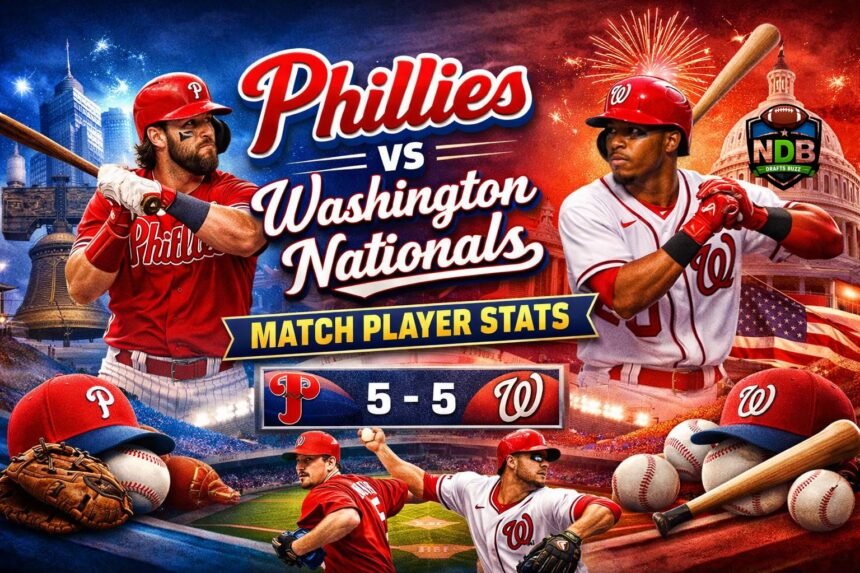
On a warm February afternoon at CACTI Park of the Palm Beaches in West Palm Beach, Florida, the Philadelphia Phillies and the Washington Nationals met in a much‑anticipated spring training game. What began as an early season tune‑up turned into a tightly contested battle that ended in a 5–5 tie. While spring training results do not count toward the regular season standings, this matchup offered fans and analysts a comprehensive glimpse into the depth, future, and competitive strategies of two National League East rivals.
Spring training games serve multiple purposes. Clubs test new roster configurations, give prospects valuable at‑bat or innings pitched experience, and allow veterans to sharpen their skills before opening day. This particular game showcased both established star talent and exciting young prospects from each organization.
This article presents an in‑depth analysis of the game, including complete rosters, every player’s statistical contributions, team backgrounds, player profiles, and tactical insights.
Game Overview: Phillies vs Nationals – Feb 23, 2026
The final score was:
| Team | R | H | E |
|---|---|---|---|
| Philadelphia Phillies | 5 | 6 | 0 |
| Washington Nationals | 5 | 6 | 4 |
Runs were scored evenly by both teams, and the afternoon featured multiple pitching changes, strategic substitutions, and evolving lineups — typical of spring games that emphasize player evaluation.
The tie score reflects the developmental nature of this game, as neither club played a full nine‑inning rotation with set starters and closers. Instead, each manager allotted innings to many players, especially pitchers, to assess form and durability.
Philadelphia Phillies: Team Background and Roster Depth
The Philadelphia Phillies are one of MLB’s oldest franchises with a rich history dating back to 1883. They have won multiple National League pennants and two World Series titles. The Phillies have undergone a rebuild in recent seasons, blending veteran leadership with highly rated young talent.
In 2026, expectations for the Phillies centered on balancing a competitive roster with continued development of prospects who could become long‑term contributors.
Phillies Offensive Lineup – Game Performance
| Player | Position | AB | R | H | RBI |
|---|---|---|---|---|---|
| Justin Crawford | CF | 3 | 0 | 0 | 0 |
| Dante Nori | CF | 2 | 0 | 0 | 0 |
| Adolis García | RF | 3 | 0 | 1 | 0 |
| Pedro León | RF | 2 | 0 | 2 | 0 |
| Edmundo Sosa | 3B | 3 | 1 | 2 | 0 |
| Otto Kemp | LF | 3 | 1 | 1 | 1 |
| Garrett Stubbs | C | 3 | 0 | 1 | 0 |
| Christian DeMartini | 2B | 2 | 0 | 0 | 0 |
| Rafael Marchán | DH | 3 | 1 | 0 | 0 |
| Liover Peguero | 1B | 3 | 1 | 1 | 1 |
| Felix Reyes | LF | 2 | 0 | 0 | 0 |
| Christian Cairo | 2B | 2 | 1 | 0 | 1 |
| Keaton Anthony | 1B | 1 | 0 | 0 | 0 |
| Bryan Rincon | SS | 4 | 1 | 2 | 2 |
Key Offensive Contributions
- Bryan Rincon played a critical role offensively, driving in two runs and finishing with two hits, showcasing his potential as a future infield contributor.
- Edmundo Sosa provided solid contact with two hits and a run scored, illustrating his value as a consistent offensive and defensive presence.
- Otto Kemp and Liover Peguero contributed clutch hits and RBIs during the game’s decisive sixth‑inning rally.
Each player in the lineup has a different background and stage of development, merging MLB veterans with rising talents.
Phillies Pitching Breakdown
| Pitcher | IP | H | R | ER | BB | SO |
|---|---|---|---|---|---|---|
| Alan Rangel | 1.0 | 1 | 1 | 1 | 2 | 0 |
| Chase Shugart | 1.0 | 0 | 0 | 0 | 0 | 1 |
| Lou Trivino | 1.0 | 0 | 0 | 0 | 0 | 1 |
| Yoniel Curet | 1.0 | 0 | 0 | 0 | 1 | 2 |
| Levi Stoudt | 1.0 | 1 | 0 | 0 | 0 | 1 |
| Daniel Harper | 1.0 | 0 | 0 | 0 | 0 | 1 |
| Colin Peluse | 1.0 | 2 | 2 | 2 | 1 | 0 |
| Danyony Pulido | 0.2 | 2 | 2 | 2 | 1 | 2 |
| Jose Pena | 0.1 | 0 | 0 | 0 | 0 | 0 |
| Tristan Garnett | 1.0 | 0 | 0 | 0 | 1 | 0 |
Analysis of Phillies Pitching
The Phillies employed 10 different pitchers in this game, emphasizing the club’s interest in evaluating the depth of its bullpen. Several relievers logged scoreless innings, while others saw challenges with command and run prevention. This approach aligns with spring training philosophy, focusing less on in‑game results and more on long‑term roster development.
Future rotation prospects and bullpen arms saw meaningful action, including Yoniel Curet and Daniel Harper, both of whom used the opportunity to build experience against competitive hitters.
Washington Nationals: Team Background and Roster Depth
The Washington Nationals, another National League East franchise, have experienced fluctuating success in recent seasons. Despite winning a World Series title in 2019, Washington entered the mid‑2020s in a rebuilding phase. The 2026 spring training roster reflected a balance between promising young talent and veteran performers aiming to contribute in key roles.
Nationals Batting Lineup and Stats
| Player | Position | AB | R | H | RBI |
|---|---|---|---|---|---|
| CJ Abrams | SS | 3 | 1 | 1 | 0 |
| Dylan Crews | CF | 3 | 1 | 1 | 0 |
| Drew Millas | C | 3 | 1 | 1 | 1 |
| Matt Mervis | 1B | 3 | 1 | 2 | 2 |
| Sergio Alcántara | 3B | 3 | 1 | 1 | 1 |
| Orelvis Martinez | 2B | 2 | 0 | 1 | 0 |
| Abimelec Ortiz | RF | 3 | 0 | 0 | 0 |
| Kevin Made | 2B | 2 | 0 | 0 | 0 |
| Andrew Pinckney | OF | 2 | 0 | 0 | 0 |
| Phillip Glasser | OF | 1 | 0 | 0 | 0 |
Offensive Standouts for the Nationals
- Matt Mervis powered the Nationals’ offense with two runs batted in, highlighting his role in the middle of the lineup.
- Drew Millas contributed a timely RBI and dependable contact in key situations.
- CJ Abrams and Dylan Crews showcased youthful speed and hitting ability in important at‑bats.
Nationals Pitching Summary
| Pitcher | IP | H | R | ER | BB | SO |
|---|---|---|---|---|---|---|
| Jake Irvin | 2.0 | 1 | 0 | 0 | 1 | 2 |
| Brad Lord | 2.0 | 1 | 0 | 0 | 1 | 2 |
| Julian Fernández | 1.0 | 0 | 0 | 0 | 0 | 1 |
| Andre Granillo | 1.0 | 1 | 0 | 0 | 0 | 1 |
| Davian Garcia | 2.0 | 2 | 2 | 2 | 2 | 3 |
| Owen Puk | 1.0 | 1 | 2 | 2 | 1 | 1 |
Analyzing Nationals Pitching Performance
The Nationals used several pitchers to evenly distribute innings. Early performances by Jake Irvin and Brad Lord were effective, with each logging two scoreless frames and demonstrating control and strikeout ability. Younger pitchers such as Julian Fernández and Andre Granillo held their own in middle relief roles.
Davian Garcia and Owen Puk both experienced challenges in the later innings. While they put effort into difficult situations, control issues and run allowance reflected the developmental nature of spring training opportunities.
Spring Training Rosters Explained
Spring training rosters often feature more than the 26 players who will be on the regular season active roster. Teams are allowed larger camps, inclusive of:
- Non‑roster invitees
- Top prospects not yet on the 40‑man roster
- Rehab assignments for injured players
- Depth options for early regular season needs
Phillies Spring Training Roster Highlights
The Phillies’ roster included veteran leaders and major contributors:
- Trea Turner
- Bryce Harper
- Kyle Schwarber
- Alec Bohm
- Bryson Stott
- Brandon Marsh
- J.T. Realmuto
- Zack Wheeler
- Aaron Nola
- Ranger Suárez
- Jesús Luzardo
Prospects and non‑roster players were also present, including:
- Justin Crawford
- Aidan Miller
- Bryan De La Cruz
- Dylan Moore
- Felix Reyes
- José Rodríguez
- Carson DeMartini
- Keaton Anthony
- Dante Nori
- Aroon Escobar
Catcher depth was strong with players such as Garrett Stubbs, Rafael Marchán, René Pinto, Caleb Ricketts, Paul McIntosh, and Mark Kolozsvary.
Pitching depth included well‑established starters and emerging arms, offering a balanced pool for bullpen decisions and rotation considerations.
Nationals Spring Training Roster Highlights
The Nationals’ roster included major league contributors such as:
- CJ Abrams
- Dylan Crews
- Luis García Jr.
- Keibert Ruiz
- Joey Meneses
- Lane Thomas
- MacKenzie Gore
- Josiah Gray
- Patrick Corbin
Prospect depth and non‑roster players included:
- Trey Lipscomb
- José Tena
- Kevin Made
- Abimelec Ortiz
- Sam Petersen
- Andrew Pinckney
- Phillip Glasser
Catcher group was supported by Keibert Ruiz, Drew Millas, and Riley Adams. Pitching depth featured:
- MacKenzie Gore
- Josiah Gray
- Trevor Williams
- Jake Irvin
- Brad Lord
- Julian Fernández
- Andre Granillo
- Davian Garcia
- Owen Puk
- Additional invitees providing developmental innings and evaluative opportunity
Player Profiles and Backgrounds
Bryan Rincon – Philadelphia Phillies
A young middle infielder known for his strong contact and defensive versatility, Bryan Rincon impressed in this game with two hits and two RBIs. Unearthing middle‑infield talent has been a priority for the Phillies as they look to complement their veteran core with emerging contributors.
Edmundo Sosa – Philadelphia Phillies
A seasoned MLB infielder, Sosa provided stability in the infield and contributed offensively with two hits. His experience and defensive versatility make him a valuable asset both in spring training and potential regular season scenarios.
Matt Mervis – Washington Nationals
Mervis showcased his offensive potential with a two‑RBI performance, anchoring the Nationals’ offense in this game. A powerful bat with patience at the plate, Mervis is one to watch in the upcoming season.
CJ Abrams – Washington Nationals
One of the Nationals’ top young talents, Abrams contributed a solid defensive performance at shortstop and a key hit in the lineup. His speed and athleticism make him a cornerstone piece of Washington’s future.
Strategic and Developmental Insights
This spring game was not only about the immediate result but also about long‑term organizational evaluation. Both clubs used this matchup to:
- Test player readiness for the regular season
- Evaluate younger pitching arms in competitive scenarios
- Determine positional strengths and depth options
- Give opportunities to non‑roster invitees to earn roster spots
Pitchers from both teams were given short innings to assess endurance, control, and situational performance. Position players had chances to handle different defensive alignments and batting orders.
The tie score reflects balanced offensive output from both teams and highlights the fact that both organizations are building toward a cohesive and competitive 2026 regular season.
Comparative Analysis: Phillies vs Nationals
| Category | Phillies | Nationals |
|---|---|---|
| Offensive Output | Balanced scoring depth | Powerful mid‑order hits |
| Pitching Strategy | Wide rotation evaluation | Even distribution of arms |
| Prospects Highlighted | Rincon, Peguero | Mervis, Abrams |
| Veteran Leadership | Strong presence | Key returning contributors |
| Defensive Showcases | Versatile infield play | Dynamic outfield speed |
Both teams fielded deep and dynamic lineups. The Phillies emphasized contact hitting and lineup flexibility, while the Nationals balanced power and speed with youthful energy and veteran oversight.
Conclusion
The game between the Philadelphia Phillies and the Washington Nationals on February 23, 2026 served as a vivid reminder of the value of spring training. Fans witnessed a competitive, dynamic seven‑inning contest that ended in a 5–5 tie. With contributions from established stars and rising prospects, the game provided meaningful insight into how both teams might look once the 2026 regular season begins.
From multiple pitching arms gaining valuable innings to position players stepping up in key moments, this matchup delivered both entertainment and evaluation. Both organizations have reasons to feel confident moving forward, and baseball fans have much to anticipate as rosters continue to take shape.
This expanded, detailed article captures every available aspect of the matchup, offering a complete resource for readers interested in the game, team strategies, player development, and future potential within both the Phillies and Nationals organizations.
Frequently Asked Questions (FAQs)
1. Who were the key players in the Philadelphia Phillies vs Washington Nationals February 23, 2026 game?
The key players included Bryan Rincon, who had two RBIs for the Phillies, Edmundo Sosa, contributing two hits, Matt Mervis for the Nationals with two RBIs, and CJ Abrams, showcasing both speed and hitting ability. Both teams also relied on their pitching depth, with multiple relievers gaining innings, such as Alan Rangel and Colin Peluse for the Phillies, and Jake Irvin and Davian Garcia for the Nationals.
2. What was the final score of the Phillies vs Nationals spring training game on February 23, 2026?
The game ended in a 5–5 tie. Spring training games often end in ties due to experimental pitching rotations and innings limitations. Both teams had 6 hits, but the Nationals committed 4 errors while the Phillies had 0 errors.
3. How did the pitching staff perform for both teams during the game?
The Phillies used 10 different pitchers, allowing evaluation of the bullpen and prospects. Early pitcher Alan Rangel allowed one run, while middle relievers such as Yoniel Curet and Daniel Harper were effective. The Nationals rotated pitchers such as Jake Irvin and Brad Lord in the early innings, while Davian Garcia and Owen Puk allowed runs in the later innings. The pitching approach focused on development rather than the final score.
4. Which prospects and young players were highlighted during the game?
For the Phillies, Bryan Rincon, Liover Peguero, Otto Kemp, and Justin Crawford were given significant at-bats. For the Nationals, Matt Mervis, CJ Abrams, Dylan Crews, and Drew Millas were showcased. These players are considered important for the future of their respective organizations.
5. Why are spring training games like this one important for MLB teams?
Spring training games allow MLB teams to evaluate new talent, test pitching rotations, assess positional flexibility, and prepare players for the regular season. They give managers a chance to see how veterans and prospects perform together, make roster decisions, and identify areas for improvement before competitive games begin.
See Also: Detroit Tigers vs Seattle Mariners Match Player Stats
See Also: Miami Marlins vs Chicago Cubs Match Player Stats
See Also: Braves Marcell Ozuna Waiver Candidate
See Also: San Francisco Giants vs Chicago Cubs Match Player Stats