
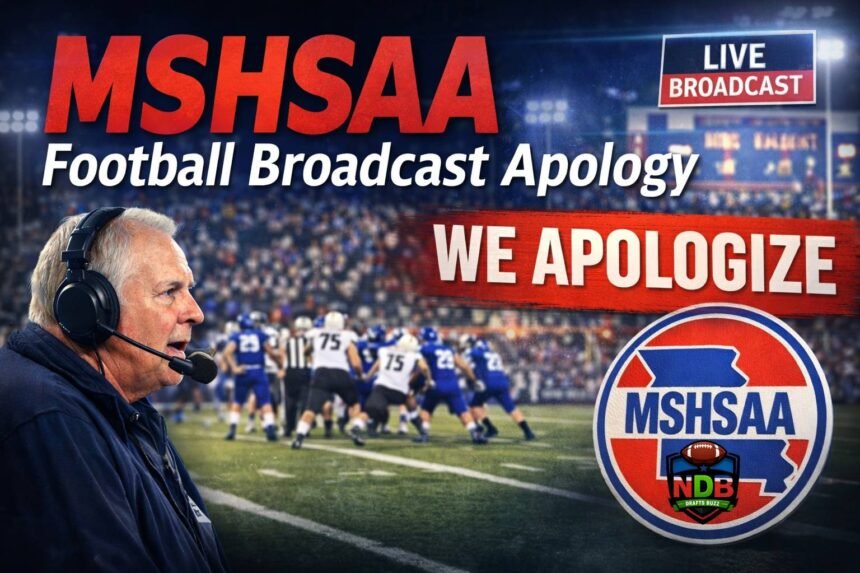
Mshsaa Football Broadcast Apology
The MSHSAA Football Broadcast Apology quickly became one of the most discussed topics in high school sports media after a controversial live broadcast during a Missouri state championship football game sparked widespread backlash. Viewers, parents, coaches, athletes, and media professionals voiced serious concerns over the tone, fairness, and professionalism displayed by one of the game’s commentators.
In response, the Missouri State High School Activities Association (MSHSAA) issued a public apology, removed the analyst mid-broadcast, and later announced new policies aimed at improving broadcast standards. The incident ignited broader conversations about ethical sports commentary, accountability, and the role of responsible journalism in youth athletics.
This in-depth guide explores what happened, why the apology was necessary, how MSHSAA handled the situation, public reaction, policy changes, and why this moment matters for the future of high school sports broadcasting.
What Is the MSHSAA Football Broadcast Apology?
The MSHSAA Football Broadcast Apology refers to the formal apology issued by the Missouri State High School Activities Association following controversial and biased commentary aired during a live broadcast of a state championship football game.
During the broadcast, one of the commentators made statements perceived as unprofessional, dismissive, and biased, which quickly triggered backlash from viewers. Complaints surged across social media platforms within minutes, prompting immediate internal review.
Recognizing the seriousness of the situation, MSHSAA took decisive action:
- The analyst was removed from the broadcast mid-game
- A public apology was issued live on air
- A formal written apology followed shortly afterward
- The broadcast was removed from official streaming platforms
- New broadcast guidelines and training measures were announced
This swift response signaled MSHSAA’s commitment to maintaining professionalism, fairness, and ethical standards in high school sports coverage.
Also Read: Manchester United f.c. vs Sunderland a.f.c. Timeline
Timeline of the Incident: What Exactly Happened?
Understanding the timeline of events is critical to grasp the significance of the apology.
1. Pre-Game Build-Up
The broadcast was highly anticipated, featuring two top high school football programs competing in the Missouri state championship. Thousands of fans tuned in, including parents, students, coaches, recruiters, and alumni.
Expectations were high for a professional, unbiased, and celebratory broadcast experience.
2. The Controversial Commentary
During the live broadcast, one analyst delivered remarks that many viewers felt were:
- Biased toward one team
- Dismissive of student-athletes’ efforts
- Unprofessional in tone
- Inconsistent with broadcast ethics
Clips of the commentary began circulating rapidly on social media, igniting immediate backlash.
3. Social Media Backlash Explodes
Within minutes, hashtags related to the broadcast began trending locally. Viewers criticized:
- Lack of neutrality
- Disrespect toward young athletes
- Poor broadcasting standards
Parents, educators, and athletic professionals publicly called for accountability.
4. Immediate Action: Analyst Removed Mid-Broadcast
MSHSAA officials, after receiving real-time feedback, made the rare decision to remove the analyst at halftime. This swift intervention underscored the seriousness of the situation.
5. On-Air Apology Issued
Shortly after the removal, an official on-air apology was delivered, acknowledging viewer concerns and expressing regret for the incident.
6. Formal Public Statement Released
Later the same day, MSHSAA released a formal written apology reaffirming its commitment to ethical broadcasting and announcing upcoming policy changes.
Why Did MSHSAA Apologize?
The apology was not simply about one commentator’s remarks — it reflected broader ethical responsibilities in youth sports broadcasting.
Key Reasons for the Apology:
- Protecting student-athlete dignity
- Maintaining broadcast integrity
- Upholding fair representation
- Preserving public trust
- Demonstrating organizational accountability
High school athletes are minors, and broadcasting standards for youth sports require heightened sensitivity, professionalism, and respect. MSHSAA’s apology acknowledged that these standards were not met.
Official MSHSAA Statement: Key Highlights
MSHSAA’s leadership released a carefully worded apology addressing several critical points:
- Acknowledgment of mistakes
- Acceptance of responsibility
- Apology to students, families, schools, and fans
- Commitment to immediate corrective action
- Promise of new training protocols
The organization emphasized its dedication to fair, unbiased, and respectful sports coverage.
Public Reaction: Fans, Parents, Coaches & Media Respond
1. Social Media Reaction
The incident quickly dominated sports-related discussions on social platforms. Most reactions praised MSHSAA’s quick response, though many called for stricter preventive measures.
Common sentiments included:
- Appreciation for swift accountability
- Concern about future broadcast professionalism
- Calls for stronger training programs
2. Parental & Educational Community Response
Parents and educators expressed concerns about:
- Psychological impact on student-athletes
- Fair representation of school programs
- Ethical responsibilities of broadcasters
However, many commended MSHSAA for addressing the situation promptly and transparently.
3. Sports Media Coverage
National and regional sports outlets covered the apology, framing it as:
A defining example of accountability in youth sports broadcasting.
Policy Changes Announced After the Apology
One of the most important outcomes of the MSHSAA Football Broadcast Apology was the implementation of new broadcasting standards.
New Measures Introduced:
- Mandatory ethics training for commentators
- Revised commentary guidelines
- Enhanced real-time monitoring systems
- Clear disciplinary protocols
- Expanded viewer feedback channels
These changes aim to prevent similar incidents in the future and establish higher broadcasting standards statewide.
Also Read: Delaware State Football vs Delaware Football Match Player Stats
Why This Apology Matters in High School Sports
This incident goes far beyond a single broadcast. It highlights the growing responsibility of sports media to uphold ethical standards — especially when covering youth athletics.
1. Protecting Student-Athletes
High school players are:
- Minors
- Emotionally vulnerable
- Developing confidence
Irresponsible commentary can have lasting emotional and psychological effects.
2. Upholding Sportsmanship Values
Youth sports aim to teach:
- Respect
- Fair play
- Integrity
- Teamwork
Broadcast professionalism must align with these principles.
3. Setting Industry-Wide Precedent
MSHSAA’s response establishes a model for:
- Transparency
- Accountability
- Rapid corrective action
Other athletic associations are now re-evaluating their own broadcast policies.
Lessons Learned From the MSHSAA Football Broadcast Apology
This incident offers important lessons for broadcasters, sports organizations, and media professionals.
Key Takeaways:
- Live broadcasting requires strict oversight
- Bias erodes public trust
- Immediate accountability restores credibility
- Training is essential, not optional
- Youth sports deserve heightened ethical standards
Long-Term Impact on High School Sports Broadcasting
The controversy is already influencing how high school sports broadcasts are structured:
- Stronger pre-broadcast training
- Tighter editorial control
- Increased real-time monitoring
- Higher ethical accountability
This ensures better protection for students and higher quality broadcasts moving forward.
Future Outlook: Can This Prevent Similar Incidents?
MSHSAA’s policy reforms significantly reduce the likelihood of repeat incidents. However, continuous evaluation, training, and transparency remain essential.
Sustainable solutions include:
- Annual broadcaster certification
- Ongoing ethics workshops
- Viewer reporting tools
- Public accountability statements
Conclusion
The MSHSAA Football Broadcast Apology represents a defining moment in high school sports media. It reinforced the importance of professionalism, accountability, and ethical responsibility when covering youth athletics.
By taking swift action, issuing a transparent apology, and implementing meaningful reforms, MSHSAA demonstrated leadership and commitment to protecting student-athletes and maintaining public trust.
As high school sports broadcasting continues to grow, this incident will remain a crucial reference point for ethical sports journalism and responsible commentary.
Frequently Asked Questions (FAQs)
1. What is the MSHSAA Football Broadcast Apology?
The MSHSAA Football Broadcast Apology refers to the public apology issued after controversial commentary during a Missouri high school championship game.
2. Why did MSHSAA issue an apology?
MSHSAA apologized due to biased and unprofessional remarks made during a live football broadcast, which triggered public backlash.
3. What actions did MSHSAA take after the incident?
MSHSAA removed the analyst, issued an apology, revised broadcast policies, and introduced mandatory training programs.
4. How did the public react to the broadcast controversy?
Viewers expressed outrage on social media, while many praised MSHSAA’s swift response and transparency.
5. Why is this apology important for high school sports?
It highlights the importance of ethical broadcasting, accountability, and protecting student-athletes from harmful commentary.