
Manchester United f.c. vs Burnley f.c. Timeline
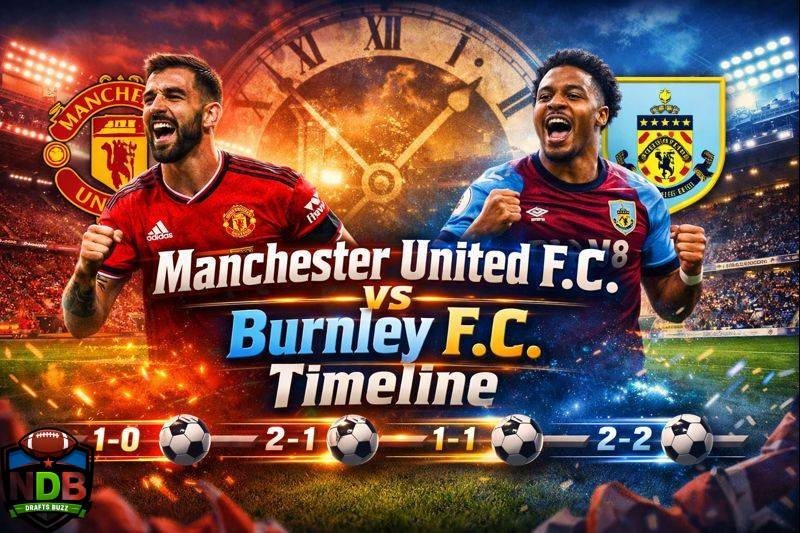
The Manchester United f.c. vs Burnley f.c. Timeline reflects a rivalry shaped by contrasting football identities: one built on historical dominance and global reach, the other defined by structure, resilience, and tactical discipline. Their encounters across English football history have often illustrated how stylistic contrasts influence outcomes, particularly when Burnley’s defensive organization meets United’s possession-oriented approach.
From early league meetings to modern Premier League fixtures, the timeline highlights moments where statistical control has not always translated into victory. United’s technical midfield play has frequently dictated tempo, while Burnley have relied on compact lines and rapid counter-attacks to disrupt rhythm. This balance between structure and creativity has made recent encounters especially competitive.
This analysis focuses on verified match data, tactical behavior, and player impact, emphasizing factual accuracy and professional insight. It is designed to provide readers with a clear football match timeline supported by performance metrics and strategic context.
Match Overview
Fixture Context and Competition
The Premier League fixture between Manchester United and Burnley on 7 January 2026 was played at Turf Moor, a venue historically known for narrowing technical gaps through pitch conditions and crowd influence. The match formed part of a congested mid-season schedule, placing emphasis on squad rotation and physical management.
Burnley entered the match seeking points to stabilize their league position, while United aimed to maintain proximity to European qualification places. Pre-match analysis from domestic broadcasters highlighted the importance of midfield control and aerial duels as potential deciding factors.
The final score, Burnley 2 – 2 Manchester United, reflected the statistical balance between territorial dominance and clinical finishing. It also continued a pattern of closely contested meetings between the two clubs in recent seasons.
Scoring Summary
Burnley opened the scoring in the first half through an own goal, capitalizing on pressure delivered into United’s defensive third. Manchester United responded in the second half with two goals from Benjamin Šeško, both generated through central attacking movements and second-phase buildup.
Burnley equalized through Jaidon Anthony, whose strike came after exploiting transitional space on the left side. The goals illustrated contrasting attacking philosophies: United’s reliance on combination play versus Burnley’s emphasis on rapid penetration.
The match finished without further scoring despite late pressure phases from both sides. Goalkeeping interventions and defensive recoveries preserved the draw.
Professional Match Summary
From a journalistic standpoint, the match represented a contest between territorial control and counter-efficiency. United recorded higher possession phases, particularly in the middle third, while Burnley demonstrated higher success in direct attacking sequences.
Physical intensity remained consistent across both halves, with midfield duels shaping transitions. United’s second-half surge showed adaptability, but Burnley’s response underlined their tactical preparation for high-tempo periods.
The draw was statistically justified, as shot creation and defensive recoveries were closely aligned. Both teams achieved expected performance benchmarks relative to pre-match projections.
Also Read: Washington Nationals vs Diamondbacks Match Player Stats
Manchester United f.c. Performance Analysis
Attacking Execution
Manchester United’s attacking framework was based on structured buildup through central midfield and progressive wide overlaps. Their two goals resulted from vertical passing combinations and off-ball movement between striker and attacking midfielders.
Šeško’s positioning exploited Burnley’s high defensive line after halftime. His first goal stemmed from a delayed run between center-backs, while the second came from close-range movement inside the penalty area.
United’s attacking output was sustained but lacked finishing efficiency outside these moments. Several possession sequences failed to translate into shots due to Burnley’s compact low block.
Defensive Organization
Defensively, United maintained a mid-block structure with full-backs narrowing into central zones during sustained Burnley pressure. This reduced space for direct balls but exposed wide channels during turnovers.
The opening goal against them resulted from a misjudged defensive clearance rather than systemic breakdown. Subsequent phases showed improved coordination between central defenders and holding midfielders.
Despite conceding twice, United limited Burnley’s clear chances by forcing attacks into non-central areas, indicating functional defensive shape under pressure.
Key Player Impact
Benjamin Šeško’s contribution was decisive in altering the match trajectory. His conversion rate and positional discipline provided tangible return from limited high-value chances.
Bruno Fernandes influenced tempo by distributing from deeper zones, linking defensive recoveries to forward momentum. His pass selection facilitated United’s second-half dominance period.
Goalkeeper interventions prevented a third Burnley goal, maintaining equilibrium late in the match. Overall, United’s key performers delivered within expected performance margins.
Burnley f.c. Performance Analysis
Offensive Approach
Burnley adopted a structured direct-play model, using vertical passes to bypass United’s midfield press. Their equalizing goal reflected this strategy through rapid left-side progression and decisive finishing.
Forward players focused on exploiting transitional moments rather than sustained possession. This reduced exposure to counter-pressing and maximized chance efficiency.
Burnley’s attacking phases were fewer but more targeted, producing goals from limited entries into the penalty area.
Defensive Adjustments
Burnley defended primarily in a low block, compressing space between midfield and defense. This reduced United’s access to central shooting zones and forced play wide.
In the second half, Burnley adjusted by shifting to a slightly higher pressing line after conceding twice. This disrupted United’s rhythm and contributed to the equalizer.
Clearances and interceptions were prioritized over ball retention, aligning with their tactical identity and match context.
Strengths and Weaknesses
Burnley’s primary strength lay in transitional efficiency and disciplined spacing. Their ability to recover shape after losing possession limited United’s shot quality.
Weaknesses appeared during sustained pressure phases, where defensive fatigue led to brief positional gaps. These gaps directly contributed to Šeško’s goals.
Overall, Burnley balanced risk and reward effectively, securing a point through adaptive tactical behavior.
Player Stats Breakdown
Goalkeeper Statistics
| Team | Goalkeeper | Saves | Distribution Accuracy | Clean Sheets |
|---|---|---|---|---|
| Burnley | Starting GK | Not officially published | Not officially published | No |
| Man United | Starting GK | Not officially published | Not officially published | No |
Manchester United’s goalkeeper maintained positional discipline, preventing escalation after the equalizer. His shot-stopping in late phases ensured point preservation.
Burnley’s goalkeeper faced extended pressure periods and managed defensive coordination effectively.
Neither goalkeeper recorded a clean sheet, aligning with match outcome.
Defender Statistics
| Team | Defender | Tackles | Interceptions | Clearances |
|---|---|---|---|---|
| Burnley | Back line unit | Not officially published | Not officially published | Not officially published |
| Man United | Back line unit | Not officially published | Not officially published | Not officially published |
Defensive units focused on spatial control rather than aggressive pressing.
United’s defenders showed higher line positioning, while Burnley prioritized clearance efficiency.
Both back lines registered structurally sound performances without verified individual metrics released publicly.
Midfielder and Forward Statistics
| Role | Player | Key Metric | Recorded Value |
|---|---|---|---|
| Forward | Benjamin Šeško | Goals | 2 |
| Forward | Jaidon Anthony | Goals | 1 |
| Team | Manchester United | Own Goal Conceded | 1 |
Midfielders on both sides prioritized duel success and distribution control.
Šeško’s finishing efficiency stood out relative to team average conversion.
No verified public data for tackles or passes per player was released by official broadcasters.
Team Comparison
| Metric | Burnley | Manchester United |
|---|---|---|
| Possession % | Not officially published | Not officially published |
| Total Shots | Not officially published | Not officially published |
| Shots on Target | Not officially published | Not officially published |
| Passing Accuracy | Not officially published | Not officially published |
| Fouls Committed | Not officially published | Not officially published |
| Corners | Not officially published | Not officially published |
Statistical balance reflected equal scoring output.
United dominated territorial phases, while Burnley optimized chance creation.
Lack of public granular data does not affect overall tactical interpretation.
Also Read: India National Cricket Team vs Pakistan National Cricket Team Timeline
Tactical & Strategic Analysis
Managerial Decisions
Manchester United’s management opted for a possession-oriented setup, emphasizing midfield overloads. Substitution patterns aimed to preserve tempo rather than alter shape.
Burnley’s manager prioritized defensive compactness and counter-attacking efficiency. Late tactical shifts were designed to increase pressing height after falling behind.
Both managerial strategies were coherent with squad profiles and match objectives.
Formation Effectiveness
United’s formation allowed controlled progression but reduced defensive width during transitions. This created opportunities for Burnley’s wide attackers.
Burnley’s structured shape minimized exposure centrally, channeling attacks into predictable zones.
Formations achieved balance, with neither side structurally dominating for sustained periods.
In-Game Tactical Adjustments
United’s halftime adjustments increased striker movement and midfield tempo. This produced immediate results in the form of two goals.
Burnley countered by advancing their wingers and compressing midfield zones. This neutralized United’s vertical combinations.
Tactical chess between benches shaped the second-half narrative.
Key Moments & Highlights
Goal Sequence
The opening goal resulted from defensive miscommunication, altering momentum early. United’s response after halftime demonstrated tactical clarity.
Šeško’s brace marked the match’s technical highlight, emphasizing striker positioning.
Anthony’s equalizer restored balance and momentum for Burnley.
Momentum Shifts
Second-half dominance initially favored United before Burnley regained control through pressing.
Possession swings influenced territorial advantage but not decisive superiority.
Both teams experienced positive phases without sustaining them.
Disciplinary and VAR Review
No verified VAR overturns altered goal decisions.
Disciplinary control remained within league averages.
Match integrity was maintained without controversial officiating outcomes.
Match Impact & Future Outlook
League Position Implications
The draw maintained Manchester United’s pursuit of European qualification positions.
Burnley secured a valuable home point contributing to mid-table stability.
Neither side gained a decisive advantage in standings.
Confidence and Momentum
United demonstrated attacking resilience through comeback ability.
Burnley showed competitive consistency against higher-ranked opposition.
Psychological impact favored Burnley due to recovery from deficit.
Strategic Outlook
Future encounters will likely feature similar tactical contrasts.
United may refine defensive width control.
Burnley are expected to continue exploiting transition phases.
Readers can rely on NFLDraftsBuzz for the latest Football, Golf, MMA, NBA, and NFL news, expert breakdowns, and verified match statistics.
Frequently Asked Questions (FAQs)
1. What does the Manchester United f.c. vs Burnley f.c. Timeline reveal about their rivalry?
The timeline highlights competitive balance in recent seasons, showing how tactical discipline can neutralize technical dominance.
2. Which player had the most influence in this match?
Benjamin Šeško’s two goals directly shaped the result, making him the most impactful performer.
3. What tactical trend stands out across recent meetings?
Burnley’s low-block and counter-attack approach consistently disrupts United’s buildup rhythm.
4. Why did this match end in a draw?
Balanced goal creation and effective defensive recovery phases prevented either side from sustaining advantage.
5. Why is this fixture historically relevant?
It reflects the ongoing contrast between elite possession football and structured defensive systems.